
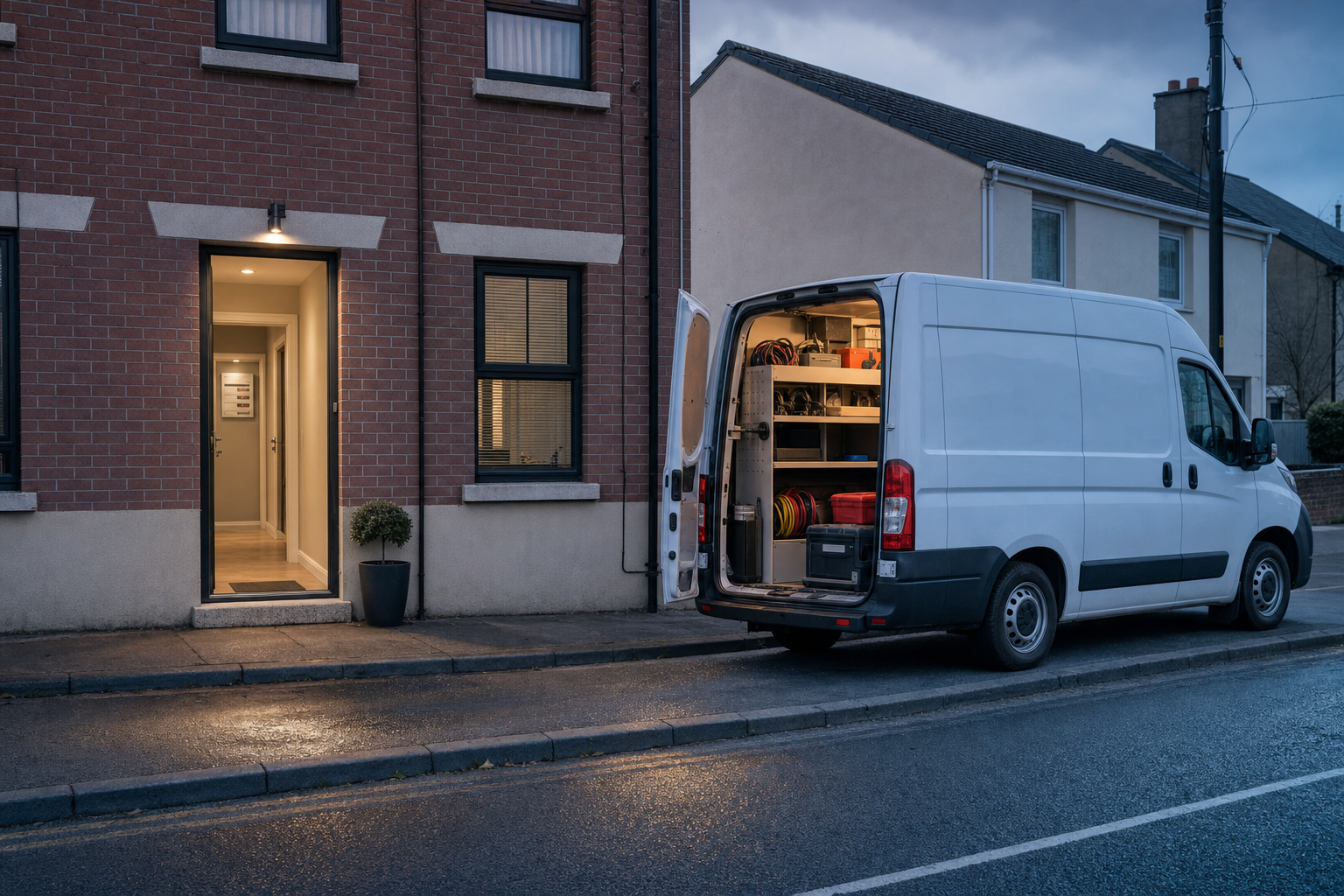
Why calling early helps make things safer
Telephone triage first
We assess the risk before travel so the visit starts in the right place.
Make safe work on site
We isolate the hazardous part quickly before wider repair work begins.
Clear next-step advice
You know what is repaired now, what stays off and what follows next.
What counts as an electrical emergency?
When there is a burning smell, sparking, exposed damage, repeated tripping or a sudden loss of power, waiting to see if it settles down is a bad plan. We treat those faults as emergencies because the risk is not just inconvenience, but heat, shock or fire. When you call Robert Wilson Electrics Ltd, tell us what you can see, smell and hear, which circuits have failed and whether the main switch is safe to reach. Until we arrive, keep people away from the hazard and switch off the affected supply only if you can do so without getting close to damage. That gives us a clearer picture and helps us arrive ready to make the installation safe.
What happens on an emergency visit
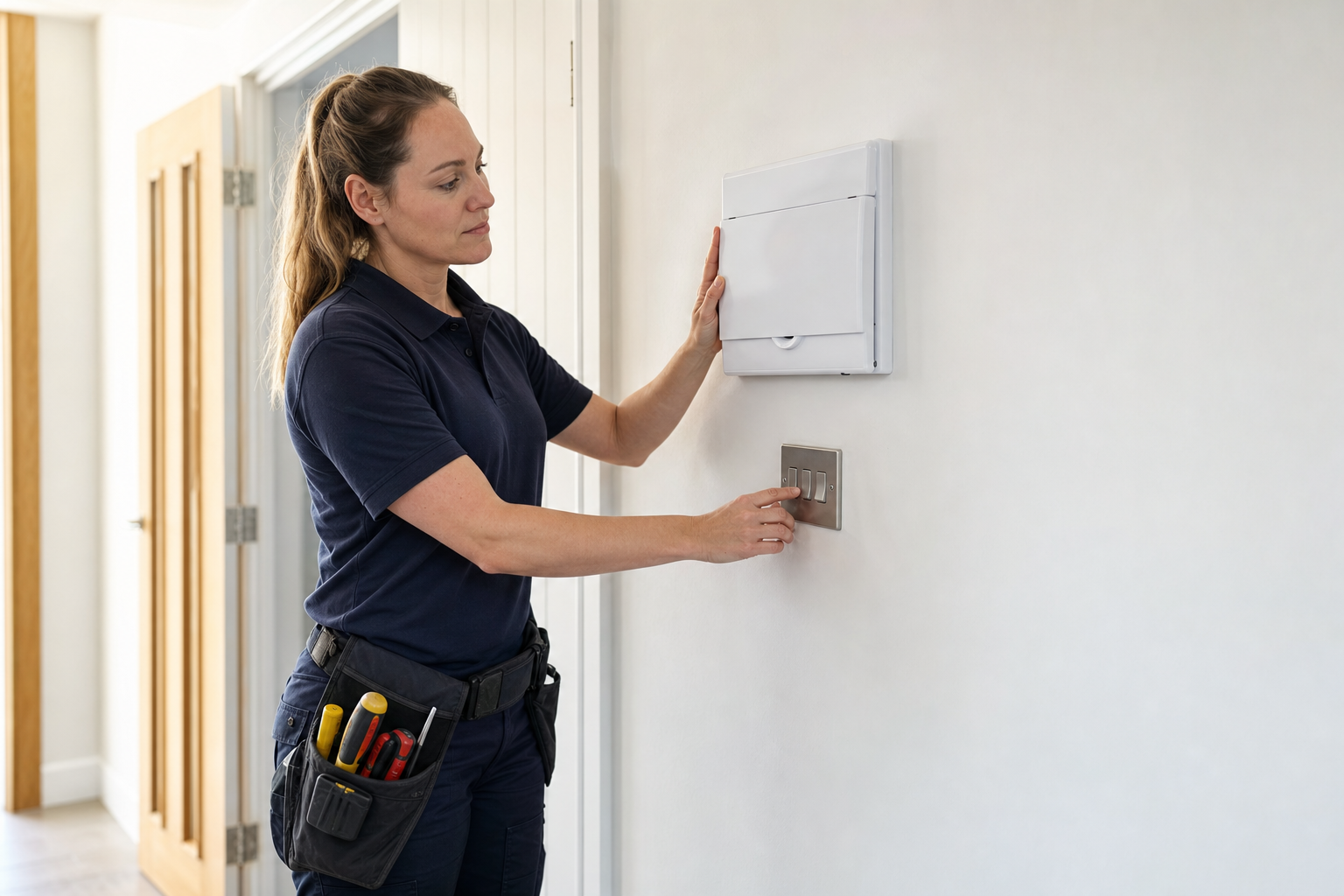
Some faults need immediate attendance. Others, such as a single dead socket with no damage or a minor fitting fault, are often better booked as a planned visit. We talk that through with you first, so you are not paying for emergency attendance when you do not need it. With Robert Wilson Electrics Ltd, the visit starts with testing and isolation, then make safe work on the affected circuit, followed by the clearest repair plan the fault allows. If the danger can be removed there and then, we do it. If wider repair work is needed, you will know what has failed, what stays isolated and what can still be used safely.
Frequently asked questions
Should I call an emergency electrician for repeated tripping?
A repeated trip with burning smells, visible damage or sudden power loss should be treated as urgent. If a breaker resets once and stays on it may not be, but if it keeps failing, call us so we can judge the risk before attendance.
What should I do before you arrive?
Keep people away from the area and switch off the affected supply only if the controls are safe to reach. Do not touch damaged fittings or keep resetting a tripping breaker. Tell us what you can see, smell and hear when you call.
Can you repair the fault during the emergency visit?
If the fault can be made safe and repaired there and then, we will do it. Where wider damage or follow-on work is involved, we isolate the unsafe part, explain what stays off and set out the next repair step clearly.