

Why a safety check is worth doing
Looks beyond the obvious
We check condition, protection and signs of overheating across the system.
Useful before big decisions
It helps before purchases, changes of use and renovation planning.
Clear priorities afterwards
You know what is sound, what needs repair and what can wait.
What we check during a safety inspection
If you are worried about the state of the electrics, an electrical safety check gives you something firmer than suspicion and crossed fingers. We inspect the consumer unit, circuits, sockets, switches, earthing, bonding and visible signs of overheating or wear, then carry out appropriate testing to see how the installation is standing up. When you arrange Robert Wilson Electrics Ltd, we treat the inspection as a practical assessment, not a box-ticking exercise. The aim is to show you what is sound, what is deteriorating and what needs attention before it turns into a fault that picks the worst possible moment.
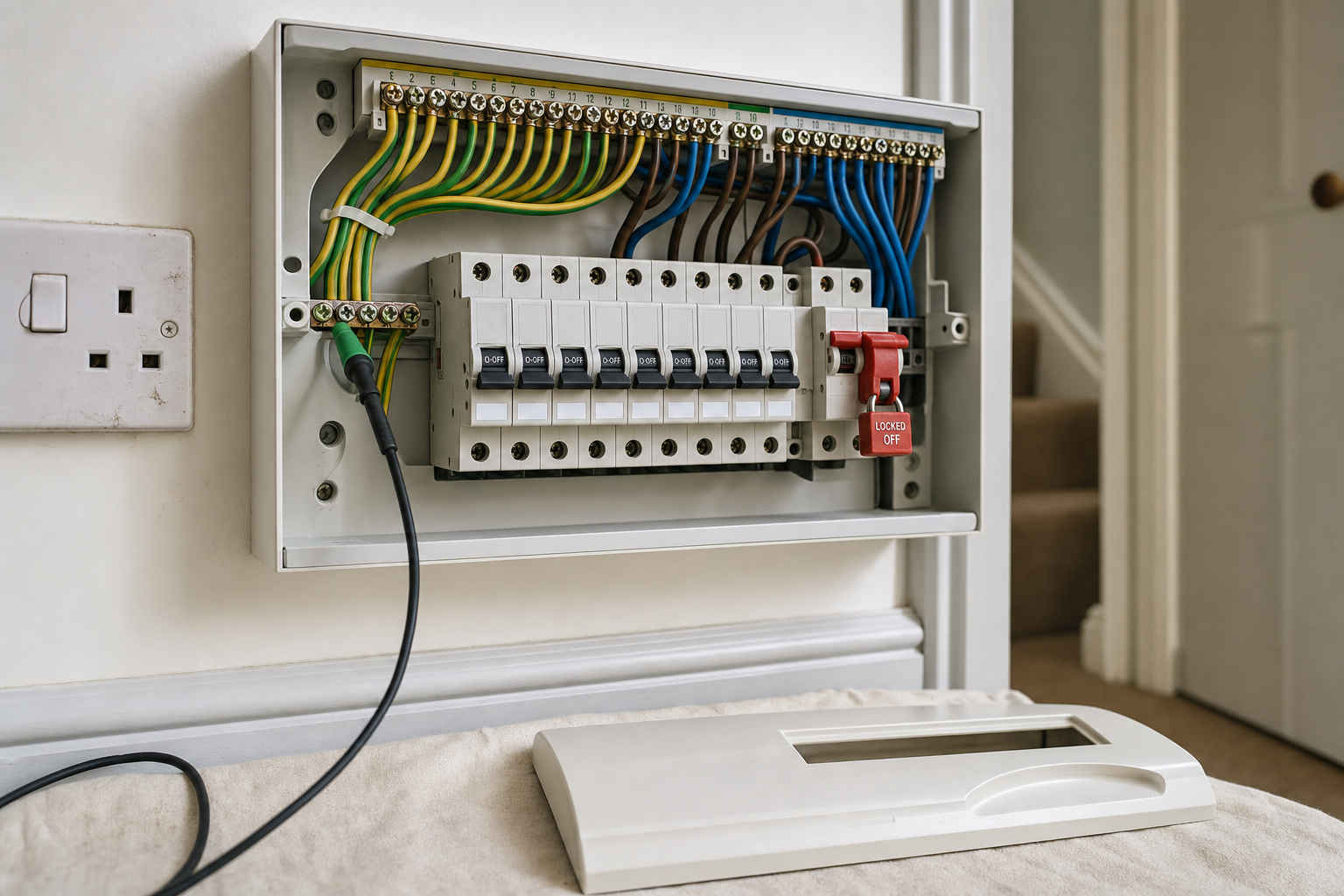
Useful before purchases and changes
These inspections are useful when you are maintaining a property, thinking about a purchase, changing how a building is used or planning renovation work that may rely on the existing installation. With Robert Wilson Electrics Ltd, you get a clear explanation of the findings and a sensible order for anything that needs doing next. If repairs or safety upgrades are needed, we can carry that work forward as well. That way, the inspection does not just tell you there is a problem. It helps move the job towards a proper fix.
Frequently asked questions
What does an electrical safety check cover?
We look at the consumer unit, circuits, sockets, switches, earthing, bonding and visible signs of overheating, wear or damage, then carry out appropriate testing. It is a practical assessment of the installation's condition rather than a quick visual once-over.
Is this useful before buying or renovating?
Yes. A safety check can help before a purchase, a change of use or planned renovation because it shows whether the existing installation is sound, what may need attention and whether other work is sensible before further changes are made.
What happens if you spot a danger?
We explain the risk clearly and tell you what needs to happen next. That may mean immediate isolation, a repair, a more detailed report or planned safety upgrade work. The key point is that you are told what is urgent and why.