

Why diagnosis saves time and guesswork
Symptoms help narrow it down
Your detail about rooms, timing and equipment gives the testing a head start.
Measured testing, not hunches
Readings and safe isolation show where the fault sits in the installation.
A defined outcome
The visit ends with a repair, isolation or clear remedial plan.
Finding the cause before swapping parts
A fault that trips once is irritating. A fault that trips at random, kills part of the house or makes lights flicker every time you boil the kettle is far harder to pin down. We use call-outs to diagnose that kind of problem properly. When you book Robert Wilson Electrics Ltd, tell us which rooms are affected, what equipment was in use and whether anything has changed recently, such as a new appliance or work on the property. That starting detail matters. It helps us narrow the circuit, see patterns in the fault and arrive with a better idea of what needs testing first, instead of poking around and hoping the problem puts on a little show.
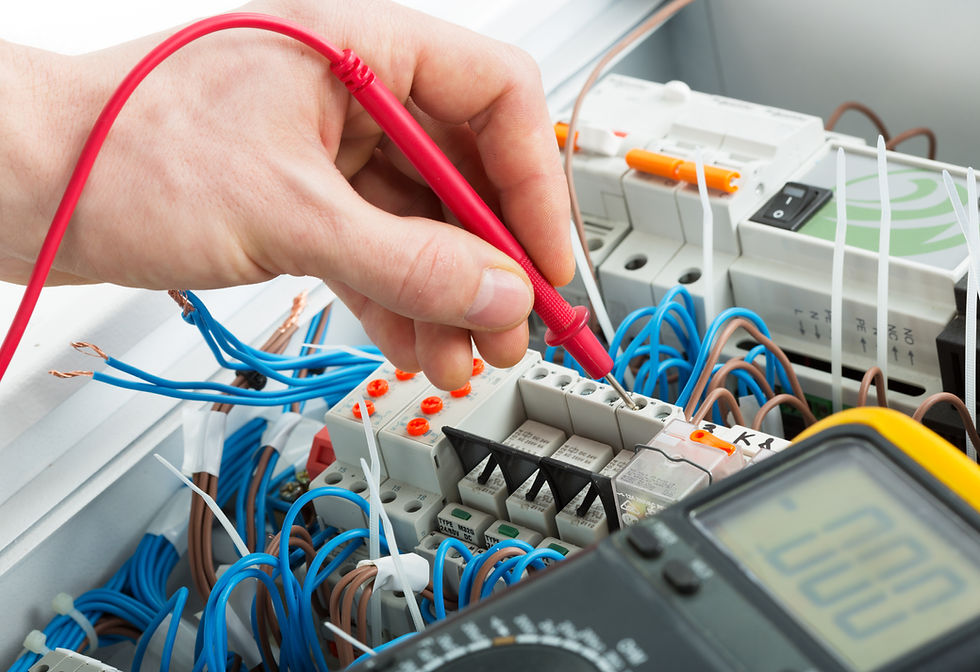
What a diagnostic call-out can lead to
Once we are on site, we work through the installation in a set order: visible condition, safe isolation where needed and electrical measurements that show what the circuit is actually doing. With Robert Wilson Electrics Ltd, the aim is not just to say something is wrong, but to explain where the fault sits and what that means for the next step. If it is safe and sensible to repair during the visit, we do it. If a component needs to stay isolated or wider remedial work is the safer route, you will know exactly why, what is affected and what can still be used.
Frequently asked questions
What details help before an electrical call-out?
Tell us which rooms or circuits are affected, what stopped working, when the fault appears and whether anything recently changed, such as a new appliance or recent work. Breaker behaviour is useful too. Those details help us narrow the fault before we arrive.
Why do lights flicker and circuits trip at random?
Intermittent faults can come from loose connections, overloaded or damaged circuits, faulty accessories or connected equipment. The symptom alone rarely proves the cause. We test the circuit and the related parts to find out what is actually triggering it.
Can you fix the problem on the first visit?
If the fault can be proven and repaired safely during the call-out, we do it. If a part must stay isolated or the issue needs broader remedial work, we explain that clearly and tell you exactly what the next step should be.